Judicial Independence and Rule of law
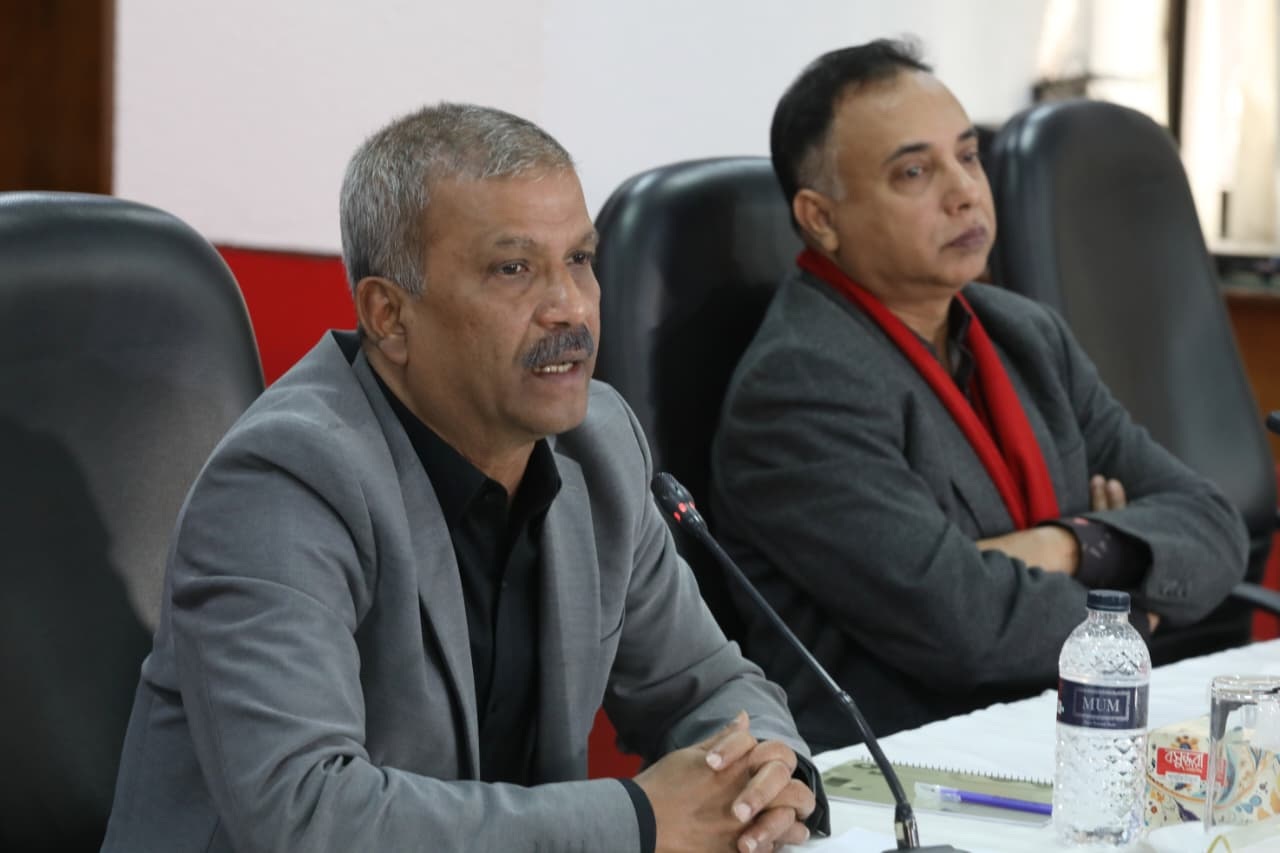
The Centre for Governance Studies (CGS) organized a policy dialogue titled "Judicial Independence and the Rule of Law" on Sunday, January 18, 2026, at 10:00 AM at the CIRDAP (Centre for Integrated Rural Development for Asia and the Pacific) auditorium in Dhaka. The event brought together political leaders, civil society representatives, academics, lawyers, and human rights activists to discuss how judicial independence and the rule of law can be ensured through the protection of citizens' fundamental rights, accountability of state power, and equality in law enforcement in a just and democratic state.
At the beginning of the dialogue, Zillur Rahman, President, Centre for Governance Studies (CGS), noted that after the July uprising, discussions on judicial independence and the rule of law reforms have reached an unprecedented scale in Bangladesh’s history. He emphasized that in a country where the judiciary functions independently, the governance of various state institutions also progresses systematically. Similarly, the rule of law reflects the presence of democracy, and when democracy is strengthened, the independence of the judiciary and other institutional separations are ensured. He acknowledged that while much is discussed and worked upon, the gap between promises and execution remains significant. Despite the formation of reform commissions involving political party representatives, the full implementation of the proposed reforms has not yet occurred. Rahman further highlighted the ongoing confusion about the upcoming referendum on the July Charter, raising questions about its specific subject matter, the process, and the level of citizens' awareness regarding their rights. He also pointed out concerns over whether administrative structures could be manipulated to benefit specific political parties. Rahman stressed that ensuring judicial independence and the rule of law is crucial ahead of the upcoming national elections. He pointed out that while people expect to find justice and trust within these systems, their expectations are not always met in reality. He also mentioned the important steps taken after the July uprising, including the establishment of a separate secretariat for the judiciary, the appointment of judges, and measures to reduce the backlog of cases. He noted that, in addition to ensuring judicial independence, it is equally essential to establish judicial accountability. Rahman reminded the audience that political parties have repeatedly changed laws to serve their own interests, which has weakened the independence and capacity of the judiciary over time. Referring to the Reform Commission’s report, he mentioned that nearly 4.3 million cases are still pending, and it is essential for the judiciary to work more systematically and effectively to reduce this backlog.
Dr. Asif Nazrul, Law Advisor to the Interim Government, said that questioning what reforms have been made has now become a common trend. Some people say no reforms have been made. However, in such a short time, there has never been such a significant amount of reform in the history of Bangladesh. The exchange rate has not changed. Remittance has increased. Where there was previously no sufficient mechanism to retain it, now it has been made possible. Reform commissions are operating at a high level. Among ten recommendations, six have been retained, so it cannot be said that no recommendations have been kept. He stated that negativity is often spread, which may act as a stimulus but ultimately has a negative influence on public perception. Referring to the period of 1954–55, he said the expectation was to establish an independent judiciary, and that goal has now been achieved. He described the most recent appointments to the Supreme Court as the best so far and stated that government powers have been handed over to the higher judiciary. However, he cautioned that independence without accountability cannot bring success. He emphasized that judges of the higher judiciary must strictly follow the code of conduct. Legal aid has increased fivefold, and theoretically all necessary steps for judicial independence have been taken. He concluded that establishing the rule of law remains the biggest challenge and warned that without sincerity from an elected government after the election, success will not be achieved.
Mohammad Tajul Islam, Chief Prosecutor, International Crimes Tribunal, stated that approximately 47 lakh cases are still pending and that it would take 25 to 30 years to resolve the current backlog in the High Court. He emphasized that without increasing the number of judges and ensuring efficiency and competence within the judiciary, this situation cannot improve. He argued that forming new benches similar to those of the High Court is essential for reducing the backlog. Judicial independence must be strengthened, and the number of qualified individuals within the judiciary must increase. He recalled an instance where a former Chief Justice allegedly stated, “Remember, after Allah and Sheikh Hasina, we will speak according to our calculations,” questioning what could be expected of judicial independence under such a mindset. He added that some judges still require a fundamental change in attitude and that justice cannot be ensured without true independence. He also expressed concern about the use of mobs to discredit revolutionary ideologies and suggested that digital case management could significantly expedite case resolution.
Dr. Borhan Uddin Khan, Professor, University of Dhaka, observed that the judiciary and rule of law were stronger in the past, but over time legal practice has deteriorated despite minimal changes in the law itself. He noted that although political parties repeatedly promise to uphold the rule of law, few fulfill those commitments. Public trust in the judiciary has been severely damaged and must be restored through strong political commitment and judicial leadership to ensure impartial and proper application of the law.
Nilufar Chowdhury Moni, Former Minister, Bangladesh Nationalist Party (BNP), stated that although a government exists, core judicial issues remain unresolved. She pointed out that the judicial appointment process has not changed and cited lobbying in high-profile cases as evidence. She argued that as long as fear of government influence persists, judicial independence will remain symbolic. She highlighted the lack of security for judges and insufficient measures to ensure their professionalism, emphasizing that political interference continues whenever parties are in power.
Bajlur Rashid Firoz, Bangladesh Socialist Party (BASAD), emphasized that transparency and accountability must be ensured first within the judiciary. He argued that if there were political will, separation of powers could be implemented immediately, but no government has demonstrated such commitment. He stressed the need to end the culture of impunity and raised concerns about mob activities allegedly originating from administrative centers. He criticized the neutrality of the government in the context of the upcoming referendum and described the situation as unacceptable.
Advocate Subrata Chowdhury, President, Gono Forum, noted that judges’ behavior has not changed despite long-standing movements for judicial independence. Although qualified candidates are now entering competitive examinations, political interference has already begun. He argued that judges often remain unaware of their independence, affecting discipline and tolerance, and expressed belief that unity among lawyers could resolve many issues.
Advocate Shaukat Ali Howlader, Central Law Secretary, Islamic Movement of Bangladesh, questioned the effectiveness of laws that are not properly implemented, emphasizing that justice is frequently delayed due to slow judicial processes. He stressed the need to focus on implementation and procedural efficiency.
Dr. Abdul Latif Masum, Former Professor, Jahangirnagar University, reflected that since independence, Bangladesh has struggled to establish a democratic system, but political misuse of power has undermined progress. He highlighted disparities in case resolution timelines and called for transparent judicial recruitment, faster resolution of political cases, and increased public awareness.
Barrister M. Moin Alam Firozi, Senior Legal Practitioner, argued that discussions often focus narrowly on institutional reforms while ignoring deeper issues of mindset, resources, training, and constitutional commitments to judicial independence. He stated that without proper instruments and support, independence cannot be realized.
Barrister Nusrat Khan, Vice Principal, British School of Law, stressed the necessity of full separation of powers, noting that political influence over the judiciary remains a major obstacle. She emphasized that reforms often exist only on paper without practical enforcement.
Shameem Haider Patwary, General Secretary, Jatiya Party (Japa), warned that prolonged injustice encourages mob justice and highlighted judicial abuse as a severe threat requiring accountability and reform. He pointed to inadequate budget allocation and an insufficient number of judges as major constraints.
Ruhin Hossain Prince, Former General Secretary, Communist Party of Bangladesh (CPB), emphasized that the rule of law depends on impartial and timely implementation rather than the mere existence of laws. He stressed the importance of guaranteeing minimum justice to maintain social stability and democratic legitimacy.
Dr. Mostafizur Rahman Faisal, Joint General Secretary, Khelafat Majlis, highlighted the lack of accountability for those in power and emphasized the need for a clear legal framework allowing citizens to challenge the government. He stressed merit-based judicial appointments, independent judicial administration, and faster justice delivery.
Former Judge Ikhtedar Ahmed, Former Judge, stated that politically influenced appointments weaken judicial integrity and efficiency, compounded by a shortage of judges that delays justice.
Barrister Shihab Uddin Khan, Senior Legal Practitioner, noted that discussions on judicial independence often overlook practical solutions and focus excessively on higher courts. He questioned whether laws are genuinely meant to ensure justice or serve political interests.
Barrister Mohammad Ali, Senior Legal Practitioner, emphasized corruption, bias, and inadequate protection of fundamental freedoms, warning that delayed justice results in denial of justice and weakened accountability.
Barrister Sarwar Hossain, Senior Legal Practitioner, reiterated that judicial independence cannot be achieved under continued political influence and stressed the need for freedom from external pressure.
Parvez Karim Abbasi, Executive Director, Centre for Governance Studies (CGS), concluded by stating that power alone cannot establish justice or legitimacy. Referring to the World Justice Project’s Rule of Law Index 2025, he noted Bangladesh’s low global ranking as evidence of institutional weakness and rising public concern, emphasizing that this reflects deeper structural challenges rather than mere statistics.
Annex
List of Speakers
|
Serial No |
Name of Speaker |
Designation/Role |
|
1 |
Dr. Asif Nazrul |
Law Advisor to the Interim Government |
|
2 |
Shamim Haider Patwary |
General Secretary, Jatiya Party (Japa) |
|
3 |
Ruhin Hossain Prince |
Former General Secretary, Communist Party of Bangladesh (CPB) |
|
4 |
Subrata Chowdhury |
President, Gono Forum |
|
5 |
Nilufar Chowdhury Moni |
Former Minister, BNP |
|
6 |
Barrister Nusrat Khan |
Vice Principal, British School of Law |
|
7 |
Bajlur Rashid Firoz |
Bangladesh Socialist Party (BASAD) |
|
8 |
Dr. Mostafizur Rahman Faisal |
Joint General Secretary, Khelafat Majlis |
|
9 |
Mohammad Tajul Islam |
Chief Prosecutor, International Crimes Tribunal |
|
10 |
Ekhtedar Ahmed |
Former Judge |
|
11 |
Barrister M. Moin Alam Firozi |
Barrister |
|
12 |
Barrister Shihab Uddin Khan |
Barrister |
|
13 |
Barrister Sarwar Hossain |
Barrister |
|
14 |
Barrister Mohammad Ali |
Barrister |
|
15 |
Dr. Abdul Latif Masum |
Former Professor, Jahangirnagar University |
|
16 |
Dr. Borhan Uddin Khan |
Professor, Dhaka University |
|
17 |
Advocate Shaukat Ali Howlader |
Central Law Secretary, Islamic Movement of Bangladesh |
|
18 |
Zillur Rahman |
President, Centre for Governance Studies (CGS) |
|
19 |
Parvez Karim Abbasi |
Executive Director, Centre for Governance Studies (CGS) |